
How to start a profitable Niche Blog (Beginner’s guide)
Build a profitable niche blog by focusing on one clear audience and one real problem.
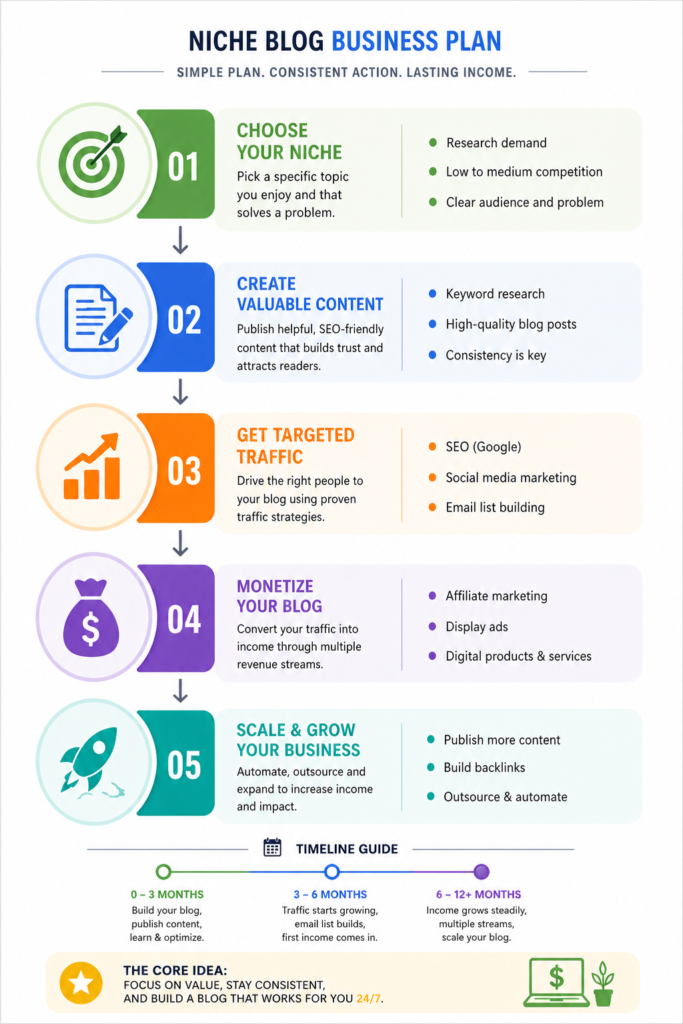
Business Model: Content-based digital publishing
Platform: Self-hosted website
Revenue Streams: Affiliate marketing, display advertising, digital products, and services
Target Timeline to Profitability: 6–12 months
Niche Blog business operates by producing high-quality, search-optimized content that solves specific problems for a defined audience. With minimal start-up costs, you can build
- Passive income streams
- A personal brand
- A sellable digital asset
This blueprint walks you through how to build a niche blog that actually makes money—not just gets views.
Define your Niche:
Broad blogs fail. Focus wins.
- Clear audience demand and search volume
- Specific problems that require solutions
- Existing products or services that can be promoted or sold
- Moderate competition with opportunities for differentiation
Good niche examples:
- “Budget travel for remote workers”
- “Meal prep for people with Type 2 diabetes”
- “Strength training for women over 40”
Define your Audience:
Get clear on who you’re helping. Think of ONE person, not “everyone”
- Who are they?
- What are they struggling with?
- What do they want?
Example:
- “Budget travel for remote workers”
- “Meal prep for people with Type 2 diabetes”
- “Strength training for women over 40”
- “workouts for busy professionals”
Content Strategy:
For a Niche Blog, content will be the core growth engine of the business. Content goal should focus on:
- Rank on search engines
- Provide real value
- Build trust with readers
Niche Blog Content Types:
1. Search Engine Optimized (SEO) Content
- “How-to” guides
- Product comparisons
- Problem-solving articles
2. Authority Content
- In-depth guides
- Case studies
- Personal experiments and results
3. Engagement Content
- Opinion pieces
- Stories and experiences
- Industry trends
Marketing Strategy:
Primary Marketing Sources
1. Search Engine Optimization (SEO)
- Keyword research and targeting
- On-page optimization
- Internal linking structure
2. Email Marketing
- Build subscriber list from day one
- Offer lead magnets (guides, templates, checklists)
- Send regular newsletters with valuable insights
3. Social Media (One Platform Focus)
- Repurpose blog content
- Engage with target audience
- Drive traffic back to the blog
Secondary Marketing Sources
- Guest posting
- Collaborations with other creators
- Community engagement (forums, groups)
Monetization Plan
- Affiliate marketing
- Promote tools/products
- Example: linking to Amazon products
- Display ads
- Networks like Mediavine or Google AdSense
- Digital products
- Ebooks
- Templates
- Courses
- Services
- Coaching
- Consulting
Financial plan & Revenue Projections:
Startup Cost:
- Domain and hosting: $50–$150/year
- Tools and software: $50–$200/month
- Content creation (optional outsourcing): variable
Revenue Projections:
Months 0–3
- Post 20 – 30 posts
- Minimal or no revenue
- Focus on content creation
Months 3–6
- Initial traffic growth
- First affiliate earnings
Months 6–12
- Increasing traffic
- Consistent revenue from affiliates and ads
12+ Months
- Scalable income through products and expanded monetization
Simple Execution Plan
Week 1:
- Choose niche
- Set up website
Weeks 2–4:
- Publish 10 articles
- Start email list
Months 2–3:
- Continue publishing
- Add affiliate links
Months 4–6:
- Optimize top posts
- Focus on traffic growth
Common Mistakes to avoid:
- Choosing a niche with no monetization
- Posting inconsistently
- Ignoring SEO
- Not building an email list
- Expecting fast results
Exit Strategy
The blog can be treated as a sellable asset. Once it generates consistent income and traffic, it can be sold through online marketplaces for a multiple of its monthly earnings
Conclusion:
This niche blog business is a low-cost, scalable opportunity with long-term income potential. Success depends on consistency, strategic content creation, and a strong understanding of the target audience.
By focusing on solving real problems, building trust, and diversifying income streams, the blog can evolve from a simple website into a profitable digital business.
Explore Market Analysis, Risk Analysis and SWOT Analysis for Niche Blog Business here.
2 thoughts on “How to start a profitable Niche Blog (Beginner’s guide)”
Leave a Reply


The emphasis on targeting a single clear problem rather than trying to serve ‘everyone’ is exactly what separates hobby blogs from profitable businesses. I particularly appreciate how the guide breaks down the timeline realistically, noting that building genuine passive income usually takes 6–12 months of consistent, search-optimized effort.
The point about looking for moderate competition with opportunities for differentiation really stood out to me. It’s easy to jump into popular niches, but identifying gaps where your content can truly stand out seems like a smarter long-term strategy. Focusing on that balance feels key to sustainable growth.